Moonfade Blog
Moonfade vs YouTube's Sleep Timer: Which Should Stop Your Playback?
Use YouTube's built-in sleep timer when you only watch YouTube and a plain elapsed-time pause of that video is enough. Use Moonfade when you play media in other Android apps, want a configurable fade before the pause request, and optionally a display lock — knowing Moonfade's pause request depends on the player and device.
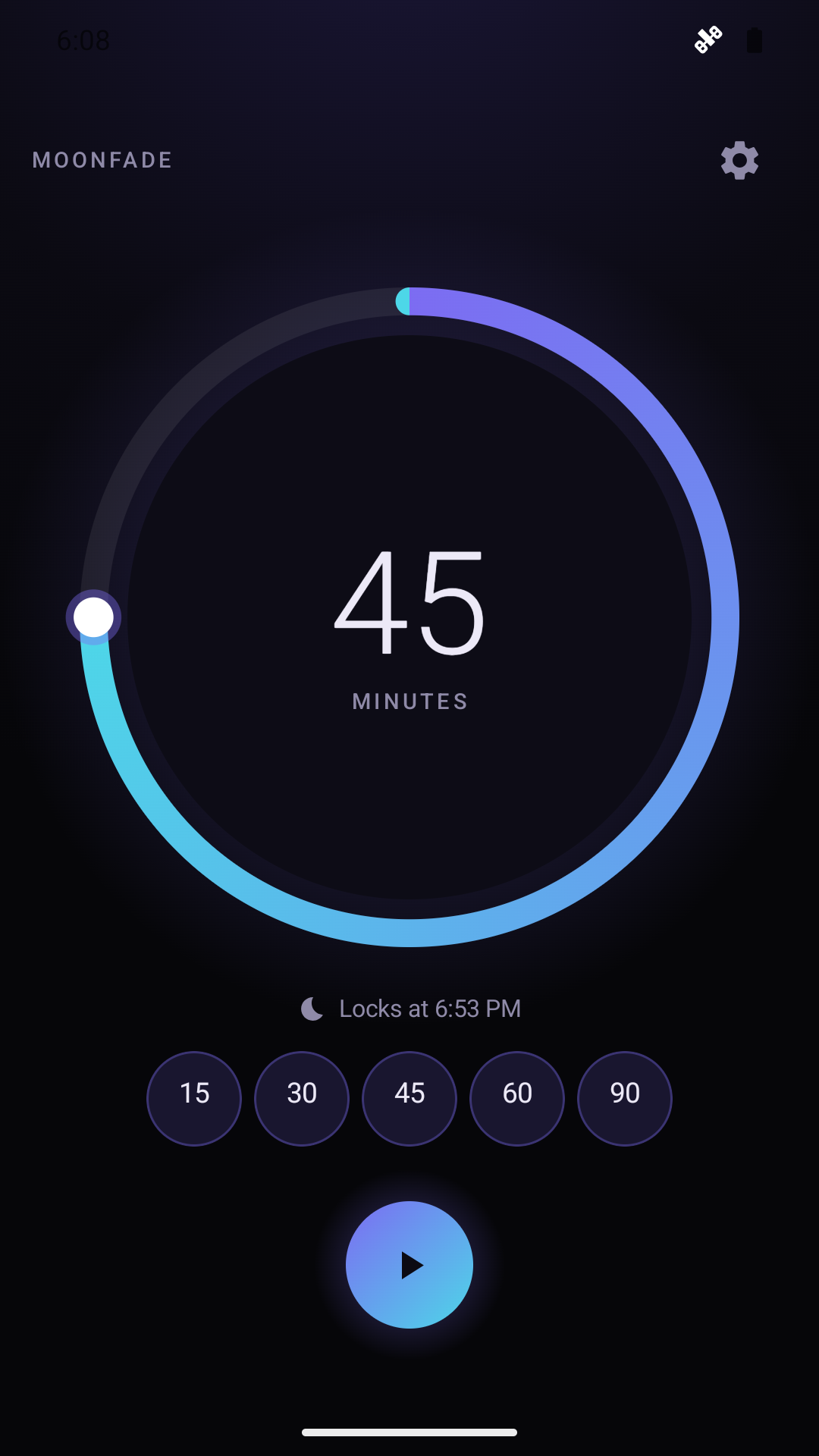
Use YouTube's built-in sleep timer when YouTube is the only thing you watch and you just need that video to pause after a set amount of time. Use Moonfade when you play music, podcasts, audiobooks, or video in other Android apps, want a configurable media-volume fade before the pause request, and optionally want the display locked — knowing Moonfade's audio-focus pause request depends on the player and device.
The two timers stop different things
These are not two versions of the same feature. Each timer acts on a different playback endpoint.
- YouTube's sleep timer pauses the YouTube video you are watching, inside the YouTube app. Google's help page walks through it: open the video, tap Settings in the player, tap Sleep timer, then pick how long it should run before the video automatically pauses (YouTube Help). The page says you get a silent notification when your video pauses, and you can reset or adjust the timer from those same steps.
- Moonfade is a separate Android app that times out a media session playing in another app. You start playback in your usual player, open Moonfade, choose a duration, and tap Start (Moonfade). With Stop audio & video enabled, countdown completion starts a 0–60-second media-volume fade followed by an audio-focus request to pause; display lock is requested separately when Turn off the screen is on.
That difference decides most of the question.
When YouTube's own timer is sufficient — or preferable
Stick with YouTube's built-in timer if all of these are true:
- YouTube is where your audio or video actually plays.
- A plain elapsed-time pause of that video is the outcome you want.
- You do not need a gradual volume fade before the pause.
- You do not need the display locked at the end.
It is simpler in exactly those cases: no second app, no external timer, no permission step. YouTube's timer pauses its own video, so there is no cross-app handoff to depend on, and it needs no screen-lock permission. If you fall asleep to a single YouTube video and waking up to a paused video is fine, its timer does the whole job.
A subtlety: your YouTube timer and your Android bedtime reminder are not the same thing. Google's page notes that a bedtime reminder is for being reminded it's time to go to bed, separate from the sleep timer that pauses the video.
When Moonfade is the better fit
Choose Moonfade when your listening does not live inside YouTube:
- Music, podcasts, audiobooks, or video playing in another Android media app.
- You want the ending itself to be gradual — enable Stop audio & video in Moonfade Settings and pick a fade from 0 to 60 seconds. The fade begins after the countdown completes; it does not run during the final seconds of the countdown (see countdown and fade order).
- You also want the display locked when time is up, via Turn off the screen. Moonfade requests that lock separately, after any enabled fade and pause work, and it can still request lock when Stop audio & video is off (screen lock at timer ending).
- You want notification controls — add time, subtract time, or stop the timer without reopening Moonfade.
If you watch video on Android and want a timer after the session, the flow is the one described in the video timer guide: start the video, set the duration in Moonfade, tap Start, then complete any prompted Device Admin activation before the countdown can begin.
Set up a Moonfade timer
- Start playback in your media app.
- Open Moonfade and choose the duration — the dial covers 1 minute to 24 hours, or use a built-in preset of 15, 30, 45, 60, or 90 minutes.
- In Settings, enable Stop audio & video and choose a fade between 0 and 60 seconds. Leave Turn off the screen on only if you want a display-lock request at the end.
- Tap Start.
- Complete the prompted Android Device Admin activation for screen lock when it appears — in the current version the in-app countdown cannot begin until that is done. Activation is not a step to do before pressing Start (why Device Admin comes first).
- Keep the timer notification available so you can add time, subtract time, or stop the timer.
The limitation that matters here
Moonfade's stop is a request, not a guarantee. It lowers the Android media-volume stream and asks for audio focus; whether a player actually pauses depends on the media app and the device (Moonfade). A zero-second fade removes the gradual interval, not the player dependence (zero-second fade). Test a short timer with the player you actually use before trusting it — the player-response test walks through separating volume, pause, and display outcomes.
By contrast, the YouTube timer acts on YouTube's own playback, so there is no equivalent cross-app uncertainty in the case it covers. That is a real reason to prefer it for a YouTube-only night.
Keep the outcomes separate
These are different results, and conflating them is how a timer seems to fail:
- A reminder tells you it is time to stop; a bedtime reminder does not pause anything.
- A finite queue ends because content ran out, not because a timer fired.
- Media-volume fade lowers the volume stream; a quiet video may still be playing.
- Actual playback pause is the player stopping playback.
- Display lock turns the screen off; it does not prove playback stopped.
Moonfade's enabled ending runs the fade then the audio-focus request, and requests display lock separately. YouTube's timer pauses the video, and the help page says a silent notification appears when that pause happens. Both are worth checking once rather than assuming.
Bottom line
If your only sleep-timer need is a YouTube video that pauses itself, YouTube's built-in sleep timer is enough — and simpler. If you listen across other Android apps, want a configurable fade and an optional display lock, Moonfade is built for that broader session, with the caveat that the pause request is player- and device-dependent.
A useful next step: run a 15-minute Moonfade timer against your usual non-YouTube player, or note your YouTube timer settings for comparison. Get Moonfade on Google Play and then set one short test timer with your everyday player to see which outcomes actually happen.