Moonfade Blog
How does Moonfade turn off and lock the display when time is up?
Moonfade uses Device Admin for its Turn off the screen behavior. Check display lock separately from media volume and player pause.
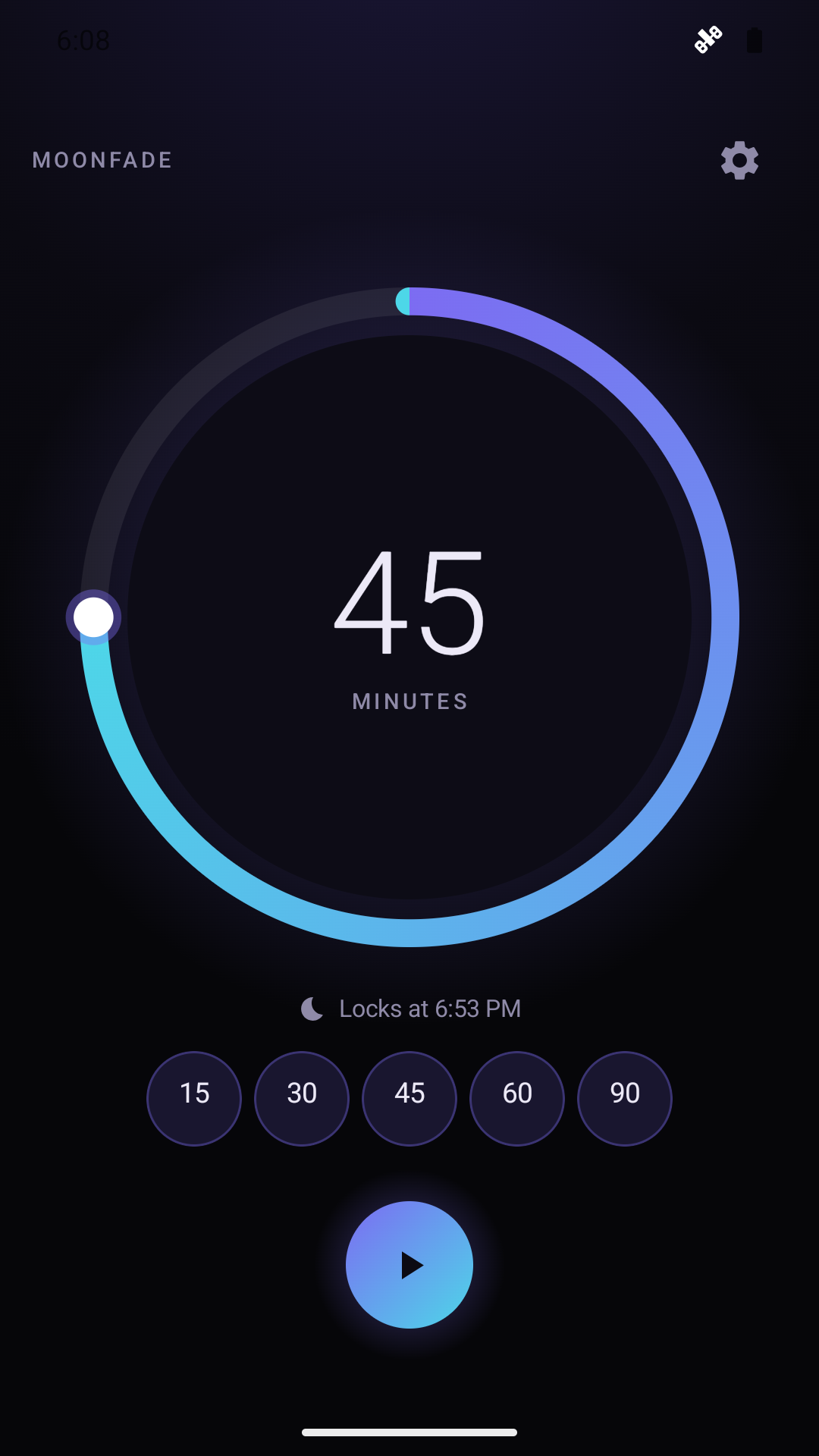
Moonfade separately requests display lock at the timer ending when Turn off the screen is enabled and Device Admin access is active. In the current in-app flow, tap Start and complete any prompted activation before the countdown can begin. Check the display-lock result separately from the media-volume fade and actual player pause; the screen turning off does not prove that playback has stopped.
The Moonfade feature guide lists screen lock alongside notification controls and the media fade. Thinking of them as separate outcomes makes it easier to understand what happened at the end of a listening or video session.
Know which access supports display lock
Device Admin is the Android capability Moonfade uses for turning off and locking the display. Tap Start and complete any activation prompt before the countdown begins in the current in-app flow. If you previously removed this access, another timer start asks you to activate it again.
Moonfade Settings contains Turn off the screen. The support page explains that turning this setting off removes Moonfade's Device Admin permission. That connection is useful when checking whether you have changed the display-lock setup since the last run.
Do not treat removal as a way to keep starting timers while avoiding the current activation requirement. The documented next-start behavior is another activation prompt.
Separate what you see from what you hear
There are three observations to make at the ending. First, the media-volume stream may fade. Second, the player may react to the playback request by pausing. Third, the display can turn off and lock through the screen-lock behavior.
A dark display only tells you about the visible display result. If audio continues or player progress later shows that the session advanced, the media ending needs its own check. Conversely, paused playback does not by itself demonstrate that the display locked.
This distinction matters with video because the image disappearing can look like playback has ended. Inspect the player's state after the ending when you need to establish whether the video actually paused, rather than assuming it from the screen going dark.
Run a short complete-ending test
Start media in the player you normally use. In Moonfade, choose a short countdown with the dial, verify Stop audio & video for the playback-ending request, and note the chosen fade value. Tap Start and complete Device Admin activation when prompted before the countdown can begin.
Let the original countdown finish without adjusting it. Keep observing through the fade interval, which runs for 0 to 60 seconds after the countdown ends. The fade is not spread across the countdown, so a positive value creates a separate interval to watch.
Use these questions to record the result:
- Did the countdown reach its end?
- Did the media volume change during the ending?
- Did the display turn off and lock?
- After checking the player, did playback pause or keep advancing?
With Stop audio & video enabled, countdown completion starts the configured 0–60-second media-volume fade, followed by an audio-focus request to pause playback. Moonfade then separately requests display lock when Turn off the screen is enabled. Disabling Stop audio & video skips both fade and audio focus. These requests do not prove that the player paused or the physical display locked. Observe actual volume, playback and display outcomes separately rather than treating a successful request as proof.
If the screen result is unexpected
Check the Moonfade screen setting and whether you completed Device Admin activation for that run. Consider whether you removed the access earlier by turning off Turn off the screen. Write down the setting and prompt state before retrying, so the next test has a clear starting point.
If display lock succeeds but media keeps playing, move to the playback checks: confirm Stop audio & video and wait through the selected fade. Moonfade Support states that devices and media apps respond differently, so display success does not resolve a separate player-response issue.
If you need help, report the Android version, phone model, countdown and fade settings, and the display and playback observations separately. That gives support a specific result to investigate rather than one broad “screen timer failed” description.
Remove display-lock access when you intend to
To remove the access, turn off Turn off the screen in Moonfade Settings. If Moonfade cannot be opened, remove its access in Android's device-administrator settings. The documented instructions say to do this before uninstalling; starting another timer requires activation again.
Use the permission-removal guide when removing access, or the uninstall guide when removing the app too. You can review or remove the access deliberately while recognizing its consequence for future starts. Display permission, media-volume changes, and a player's pause response remain separate concepts throughout that choice.
Get Moonfade on Google Play, complete the required screen-lock activation, and use a short timer to check both the display result and your player's actual playback state.