Moonfade Blog
Why does Moonfade ask for Device Admin before starting a timer?
Moonfade currently requires Device Admin before timer start so it can turn off and lock the display. Learn the purpose and removal path.
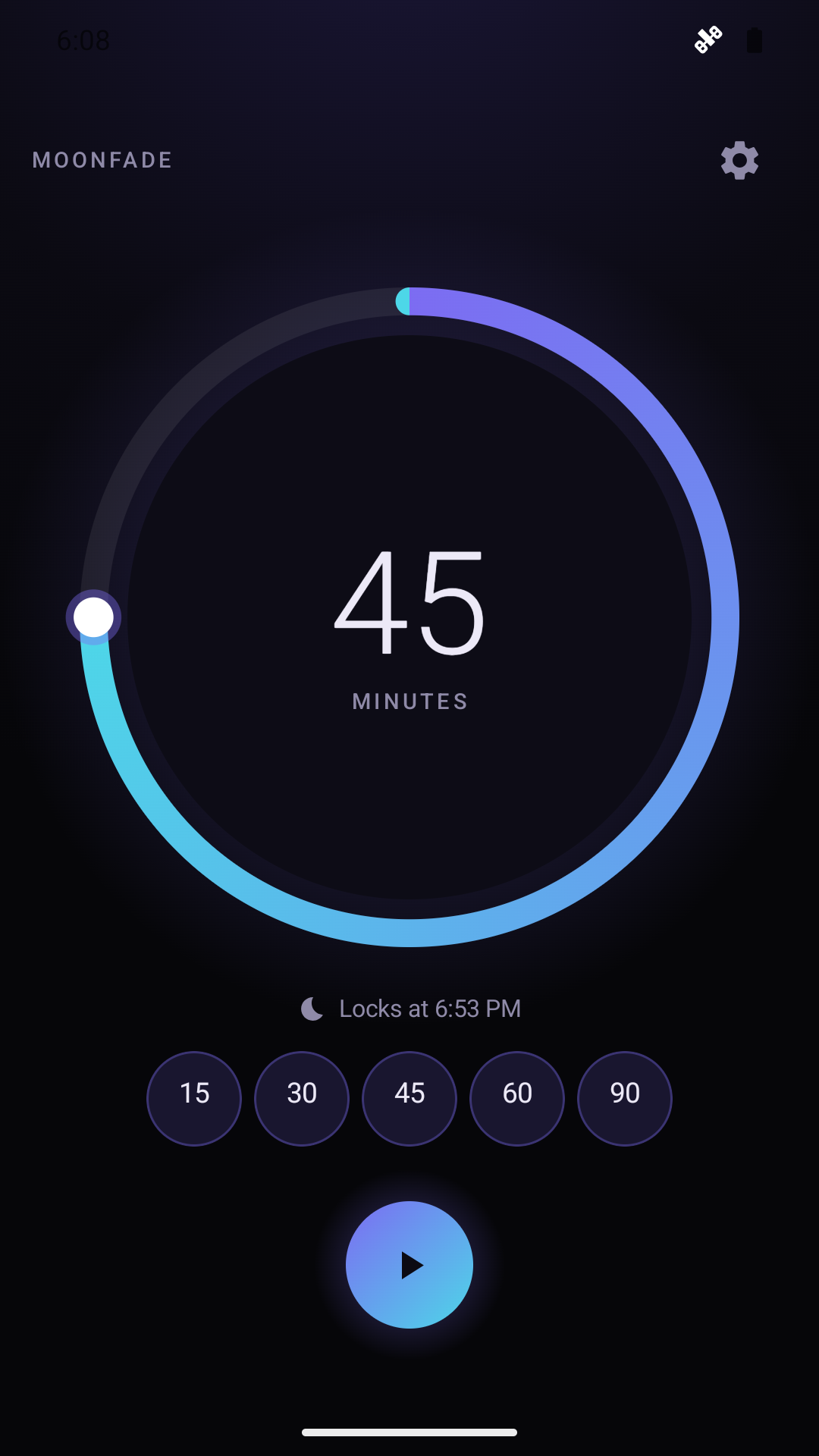
Moonfade asks for Device Admin before starting a timer because it uses that Android capability to turn off and lock the display when time is up. Activation is required before timer start in the current version. It is a display-lock permission, separate from whether your media app responds to a playback request.
The Moonfade product guide explains the start requirement and the screen-lock purpose. If you encounter the activation prompt on your first run, completing it is part of the documented setup rather than an optional step you can skip while expecting the same timer start.
Place the prompt in the setup sequence
Start your media in the app you normally use, then choose a duration in Moonfade. Check the ending settings, including Stop audio & video and your fade duration. Tap Start, then read and complete the Device Admin activation prompt before expecting the countdown to begin.
A useful first run is a short countdown you can observe. That lets you see what the access is used for at the ending, alongside the separate volume and playback outcomes. It also avoids waiting through a long session simply to check whether display lock behaves as expected.
Removing the access and returning to Start does not remove the current requirement. Moonfade asks for activation again when another timer is started. Keep that consequence in mind if you are deciding whether to retain or remove the permission.
What the permission is used for
Moonfade's stated purpose for Device Admin is to turn off and lock the display at the end of the timer. The support instructions connect required activation before timer start with that display behavior.
Display lock is a result you can observe: the screen goes off and the device is locked. It does not establish that media paused. Audio can still need a separate player-state check after the timer ending, so do not use the lock result as the only measure of a successful playback stop.
Likewise, this access should not be understood as universal control over media apps. Moonfade uses media-volume changes and an audio-focus request for the playback ending, with behavior dependent on the phone and player.
Separate the display ending from the media ending
The countdown you choose is the waiting period. With Stop audio & video enabled, countdown completion starts the configured 0–60-second fade, followed by the audio-focus request to pause playback. Moonfade then separately requests display lock when Turn off the screen is enabled. If playback ending is disabled, fade and audio focus are skipped. Device Admin belongs to the display-lock part of the setup rather than proving that the playback request will succeed.
For a short test, record three separate observations: whether media volume changed, whether playback paused, and whether the display turned off and locked. A partial result is still useful information. For example, a locked screen with continuing playback tells you to investigate the media response rather than assuming the display permission failed.
See the complete conditional ending order for timing examples. Accepted requests are not proof of actual playback pause or physical lock; observe the whole ending on your actual device.
How to remove the access later
Open Moonfade Settings and turn off Turn off the screen. Moonfade removes its Device Admin permission when you do this. The support page says to remove the permission before uninstalling, and it notes that starting another timer asks for activation again.
If you cannot open Moonfade, use Android's device-administrator settings to remove Moonfade's access. Menu names and settings locations can vary across phones; use the device-administrator controls shown on yours.
Use the permission-removal guide if you only want to remove access, or the uninstall guide if you are leaving the app. Removal and uninstalling are separate decisions. You can remove the administrator permission because you want to review the access, even if you have not yet decided to uninstall. Remember that another timer start brings back the activation requirement.
Read the privacy explanation when reviewing access
Moonfade's Privacy Policy describes its Android capabilities and repeats the Device Admin purpose and removal instructions. It also distinguishes locally stored timer settings from the advertising and purchase services the app uses.
If the activation or removal flow is unclear on your phone, contact support with the model, Android version, and the point where you are blocked. A description of the prompt or the setting you reached is more actionable than a general report about permissions.
Get Moonfade on Google Play, review the required Device Admin prompt before starting, and use a short run to observe display lock separately from playback.