Moonfade Blog
How can I test whether my media player responds to Moonfade?
Run a controlled short timer to inspect media fading, the player’s pause response, and display lock separately on your Android device.
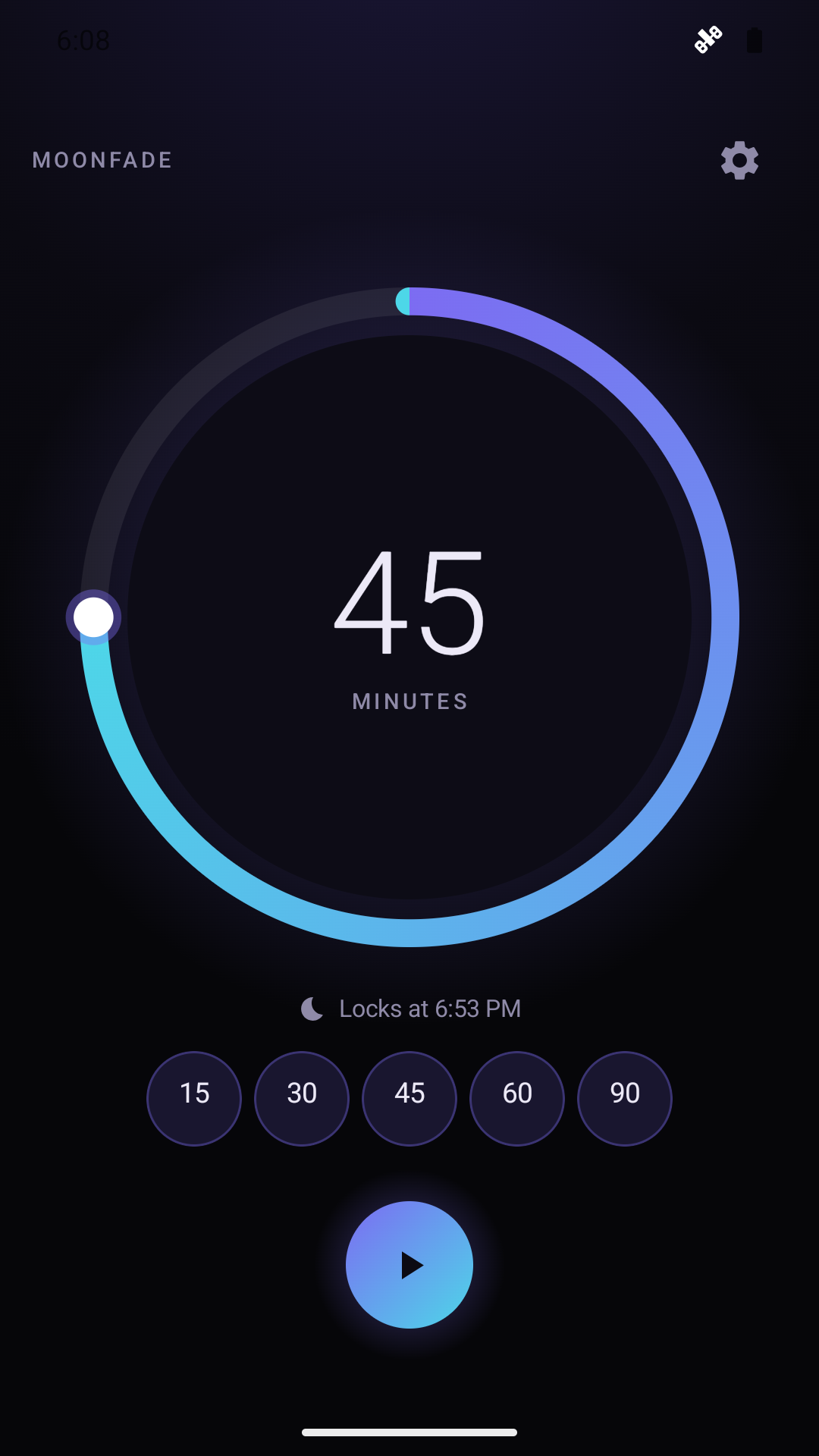
Test Moonfade with a short countdown while your usual media player is actively playing. Enable Stop audio & video, choose a known fade duration, complete Device Admin activation before starting, and observe the whole ending. Check the player's playback state separately from the volume change and display lock.
The Moonfade product instructions explain that media-app and Android-device behavior can vary. A controlled test answers a narrower, useful question: what happens with this player, this phone, and these settings?
Prepare a setup you can observe
Choose media with an obvious playing state or progress indicator. Start it in the app you intend to use with Moonfade. Confirm you can hear it before switching to the timer, so a silent starting point cannot be mistaken for a successful fade.
Keep the test simple. Use the same phone, player, and listening setup throughout one run. If you change several things at once, a different result will be harder to interpret.
Write down the player name and the timer settings you plan to use. You do not need a detailed technical log: a few clear notes about the selected countdown, fade duration, and enabled settings are enough to make the observation repeatable.
Use the original printable compatibility method and blank record if you want a reusable place for these notes. Keep the record on paper or in your own local notes; the page has no online fields or results to submit. Its blank records report no tested-device or player findings.
Set a short countdown and a known ending
Use Moonfade's dial for a short duration within the supported 1-minute-to-24-hour range. A short run is convenient because you can stay present to inspect the transition. Choose a fade length from 0 to 60 seconds and record it.
For an easily separated sequence, you could use a 1-minute countdown with a 20-second fade. Expect the countdown first, followed by that fade interval. Keep observing after countdown zero rather than declaring the test finished immediately.
Check that Stop audio & video is enabled in Settings. The Moonfade support page specifically recommends that check when playback does not stop as expected.
Start and watch the sequence
The current Moonfade release requires Device Admin activation before starting a timer. Tap Start, complete the activation when prompted so the countdown can begin, and keep the timer notification available. For this run, avoid adding or subtracting time so the ending remains easy to compare with your notes.
Required activation enables Turn off the screen. Confirm and record the actual Stop audio & video, Turn off the screen and fade settings after activation, rather than assuming an earlier switch state survived. Keep those settings unchanged during the run. Turning off the screen-lock setting removes Device Admin access; another in-app Start requires activation again. This test does not prescribe a lock-free playback-only start or changing permissions during a countdown.
If the activation steps are unfamiliar, use the first-timer guide and screenshot demo before the test.
During the countdown, confirm the media is still playing. Once the countdown ends, listen for the media-volume change during the selected fade interval. If your fade is zero, there is no gradual fade period to wait through.
After the ending interval, inspect the media app. Is its playing state changed? Does progress still advance? A quiet soundtrack can still be moving forward, so use the player's visible state as well as what you hear.
Record three separate outcomes
Use a small checklist rather than one overall pass-or-fail label:
- Did the countdown reach its end as expected?
- Did media volume reduce during the ending?
- Did the player pause, continue progressing, or remain unclear after the request?
- Did the display turn off and lock, stay on, or remain unclear?
The display outcome belongs to screen lock, while the playback outcome belongs to the media player response. Keeping them separate makes it possible to describe a partial result accurately, such as volume fading while playback continues. If the run is interrupted or an observation is unclear, keep it inconclusive rather than filling in an assumed success. The record cannot establish whether Android accepted an internal audio-focus or lock request.
Android's audio-focus documentation explains focus requests and changes used to coordinate playback. A request is not proof that your particular player stopped; device versions and player implementations matter. That is why the actual-device test is more useful than assuming a universal result.
Retest one change or report what happened
If the player keeps playing, verify Stop audio & video again and repeat the same short test. Change one chosen setting at a time if you want to compare results. This avoids confusing a new fade value with a different player response.
If playback still advances, follow media-keeps-playing troubleshooting before changing unrelated settings. For support, include your Android version, phone model, player name, countdown, fade length, and the observations above. The support page asks for device details and a brief description; those specific observations explain the problem more clearly than “the timer did nothing.”
Get Moonfade on Google Play, run one short test with your usual player, and record the separate volume, pause, and display results before trying a longer session.