Moonfade Blog
Where does Moonfade store timer settings and personalization?
Moonfade keeps timer preferences on your device. Separate those local values from Google Play purchase records and advertising processing when planning changes.
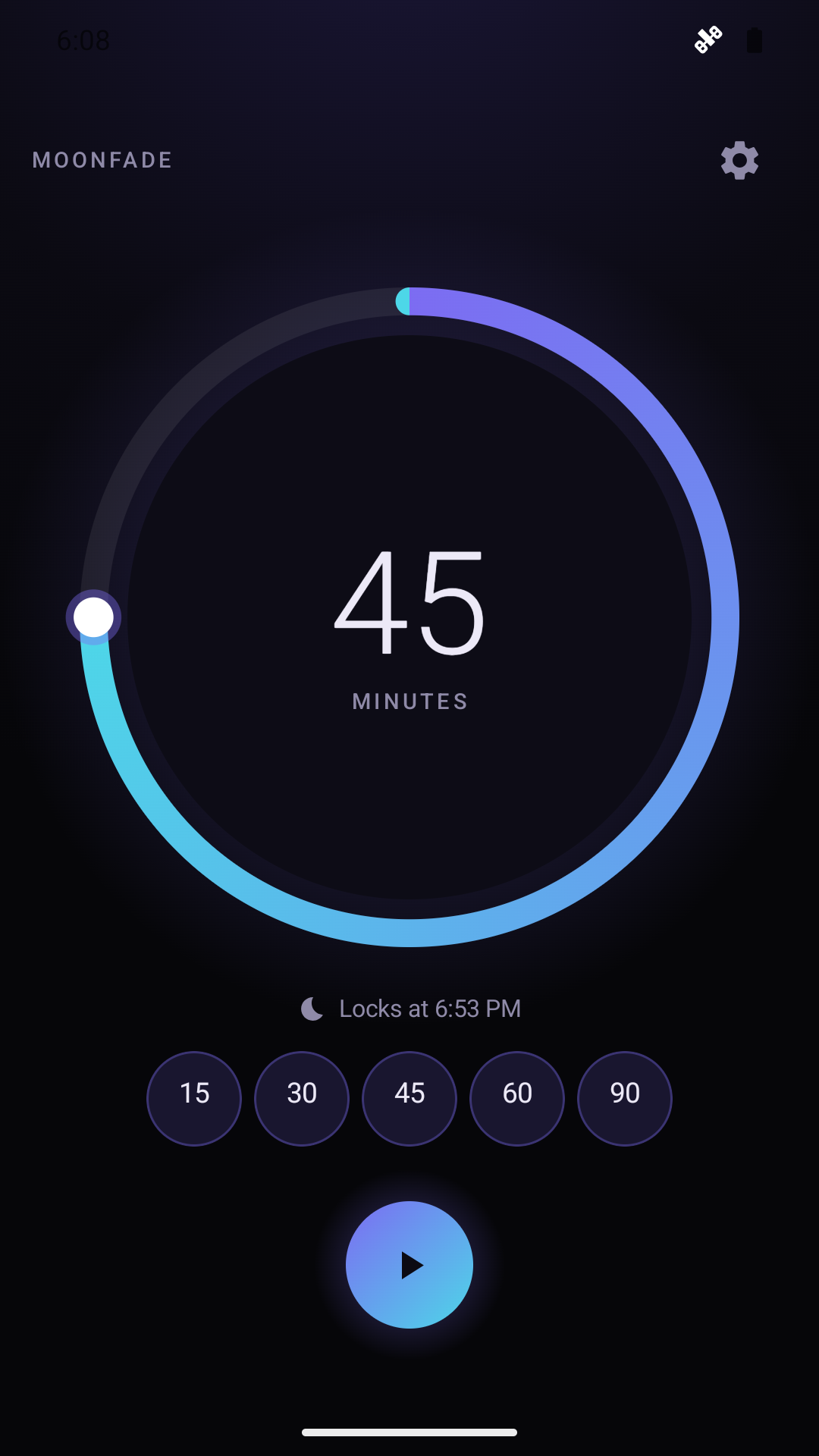
Moonfade stores timer settings, presets, theme, and fade choices locally on your Android device. They are not a Moonfade cloud profile that follows you between installations. Android backup and device transfer are disabled for the app, so plan to recreate those preferences if you clear app data, reinstall, or move to a different installation.
Identify the preferences you want to keep
Think about the choices that make your timer routine convenient: a duration you often select, your preset preferences, your preferred appearance, and the ending you use. Moonfade's product guide describes the duration dial, built-in presets, post-countdown fade, and optional Pro customization.
These choices can matter independently. You might want the same session duration on another phone but choose a different fade after testing that device's player. Knowing where the settings live helps you preserve the routine you want without assuming every part of the setup transfers automatically.
Before a planned reset or reinstall, write down the choices you want to recreate. A personal note is a practical reference, not a claim that Moonfade has an export or backup command. Do not assume an undocumented account-sync feature exists.
If you are preparing a reset, follow clearing app data without confusing settings and Pro. For another device, use the new-phone settings and Pro guide.
What the privacy policy says about storage
The Moonfade privacy policy states that timer and customization settings are not sent to a server operated by the developer. It also explains that local app storage holds other app-state information, including cached Google Play entitlement status and advertising-related state.
The central point for timer personalization is that these values live in the installation. You can remove local data through Android's app-storage controls or by uninstalling Moonfade. With Android backup and device transfer disabled, the policy explicitly says local values do not transfer to a different installation.
That is a specific statement about Moonfade's data handling. Do not turn it into a prediction about a phone manufacturer's undocumented transfer utility or a promise that another device will arrive with the same preferences. Use the supported policy as your planning basis.
Separate local settings from a Pro purchase
A locally cached purchase status and the store's purchase record are different things. Clearing app data or uninstalling does not remove a purchase recorded by Google Play. An eligible Pro purchase can be restored using the Google account that made it.
The official Pro restoration instructions specify opening the Moonfade Pro screen and choosing Restore purchase with that purchasing account. Restoration concerns the unlock. It is not a promise to rebuild custom presets, theme choices, or your old fade configuration.
Use the Pro-restoration guide for the eligible purchase; recreate preferences separately.
For a new installation, treat those as two tasks: check the eligible Pro unlock, then configure the preferences you want. Keeping the tasks separate makes an unexpected result easier to diagnose. Missing settings are expected local-data consequences; a Pro unlock remaining unavailable needs its own account-and-restoration check.
Local preferences do not describe every service
The free version may show ads through Google Mobile Ads. Google Play handles purchases, and advertising and consent services may process information described in the privacy policy. The fact that timer preferences stay on-device does not establish that the app's other services perform no processing.
If you have an advertising question, read the advertising section and use Privacy choices in Settings where required and available. If you have a purchase question, focus on the purchase and restoration information. Avoid treating the location of timer settings as an answer to unrelated service questions.
Optional usage results do not upload your settings
Moonfade 1.0.1 also has a separate Share anonymous usage results setting, off by default and not required for a timer. It sends coarse usage and request-outcome categories only after opt-in; it excludes timer duration, player names, listening history and persistent installation/account identifiers. A recorded request outcome does not establish actual playback pause or physical screen lock. See the privacy policy’s optional app usage measurement disclosure for the data, retention and choices. This option is separate from advertising consent.
Rebuild and verify your routine when needed
After recreating preferences, test a short timer with the current media app. Start playback first, enable Stop audio & video, choose the countdown and post-countdown fade, then tap Start and complete Device Admin activation when prompted before the countdown begins, as required by the current version.
Observe the player's actual response separately from volume reduction and display lock. Recreated preferences are a starting configuration; they are not proof that a different installation or player behaves exactly like the earlier one.
Get Moonfade on Google Play, record the local choices that matter to you, and verify your timer routine with a short test before planning a longer session.