Moonfade Blog
How do I remove Moonfade’s screen-lock permission?
Turn off Turn off the screen in Moonfade Settings to remove Device Admin access, or use Android’s administrator settings if the app cannot open.
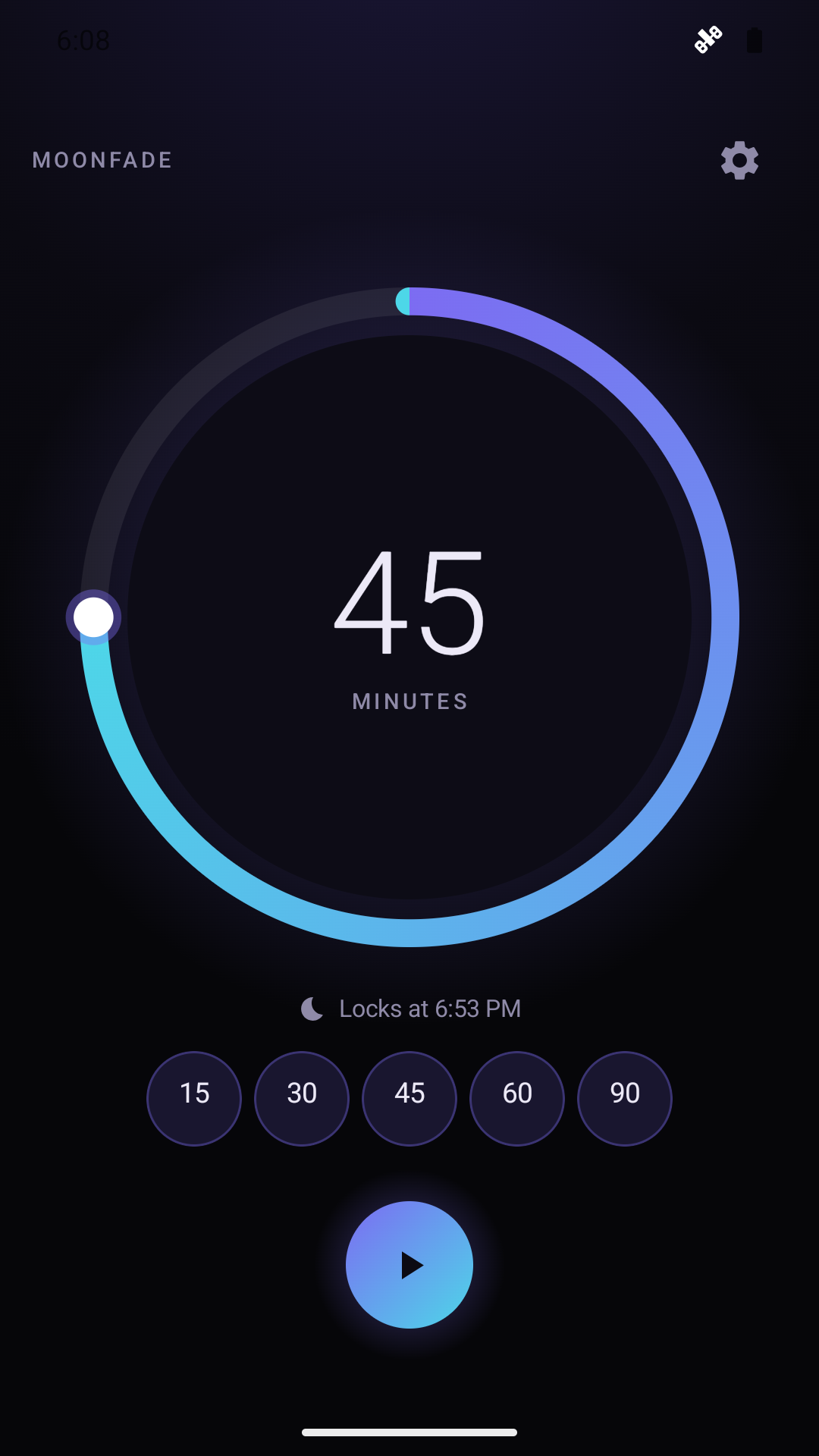
To remove Moonfade's screen-lock permission, open Moonfade Settings and turn off Turn off the screen. Moonfade removes its Android Device Admin access when you do this. If you cannot open the app, remove Moonfade from Android's device-administrator settings instead.
The Moonfade product FAQ gives both routes and explains an important consequence: starting another timer asks you to activate screen lock again. The current release requires Device Admin activation before timer start, so removing the permission does not create a way to bypass that requirement.
Decide whether you are removing access or uninstalling
You may be reviewing permissions, preparing to uninstall, or simply deciding whether to use the app again. Those are different decisions. Removing Device Admin access addresses the screen-lock permission; it is not the same action as deleting Moonfade from the phone.
If you intend to keep the app, remember what will happen at the next timer start. Moonfade asks you to activate the permission again before starting. If you intend to uninstall, remove the administrator access first as described in the support instructions.
Keeping those steps separate makes the process clearer. You can remove access and then make your next decision, rather than treating the permission switch as an immediate uninstall command.
For the separate app-removal steps, see uninstall Moonfade with Device Admin. If you plan to return to timers, review why activation is required before Start before reactivating access.
Use the Moonfade setting when the app opens
Open Moonfade, go to Settings, and find Turn off the screen. Turn it off to remove the app's Device Admin permission. This is the reader-facing procedure documented by Moonfade Support.
After changing the setting, distinguish the screen-lock access from other timer choices. The permission supports turning off and locking the display at the ending. It is not a general permission that grants guaranteed control over your media player's playback.
Do not start another timer merely to test whether removal persists unless you intend to reactivate the access. Starting a new timer brings back the current activation requirement. Reviewing Android's device-administrator controls is a clearer way to inspect the access without deliberately beginning another timer setup.
Use Android's administrator controls if Moonfade cannot open
If you cannot reach the Moonfade setting, open your phone's Android settings and locate its device-administrator controls. Find Moonfade there and remove its administrator access. The product support page documents this as the fallback when the app cannot be opened.
The precise menu names and location can vary by phone. Avoid assuming that another person's device has the same path or labels as yours. Focus on finding the device-administrator controls and the Moonfade entry, rather than following an invented universal sequence of menus.
If you still cannot locate or remove the entry, contact Moonfade support with your phone model, Android version, and the place where you are blocked. Describe what you can see without sharing passwords or other authentication details.
Understand what removal changes
Moonfade uses Device Admin to turn off and lock the display at the timer ending. Removing that access concerns the display-lock capability. The current start policy then asks for activation again when you attempt another timer.
This should not be confused with a media test. Volume reduction and actual playback pause are separate outcomes, controlled by the timer's ending settings and the player response. A permission-removal result does not establish whether a given player would pause after a future, properly started timer.
It also does not make the permission optional at timer start in the current release. You can remove it, but a later start requires reactivation. That distinction helps avoid interpreting the removal setting as a promise of a separate permission-free timer mode.
Review data removal separately if needed
Moonfade's Privacy Policy describes Device Admin removal and separately explains local app storage. Removing the screen-lock permission is not the procedure it gives for removing local timer and personalization data.
If your goal also includes removing those local values, read the policy's app-storage and uninstalling explanation rather than assuming the permission change clears them. Purchase handling is another separate topic: the policy distinguishes locally stored settings from purchases recorded by Google Play.
After the administrator access is removed, proceed with uninstalling if that was your goal. If you later choose to use Moonfade again, account for the required activation before starting a timer and test the complete ending with your usual player.
For future use, Get Moonfade on Google Play and review the Device Admin prompt before starting. For removal now, begin with Turn off the screen or the Android administrator fallback above.