Moonfade Blog
What are Moonfade’s five built-in timer presets?
Moonfade’s quick presets start at 15, 30, 45, 60, and 90 minutes. Understand when to use them and how Pro editing differs.
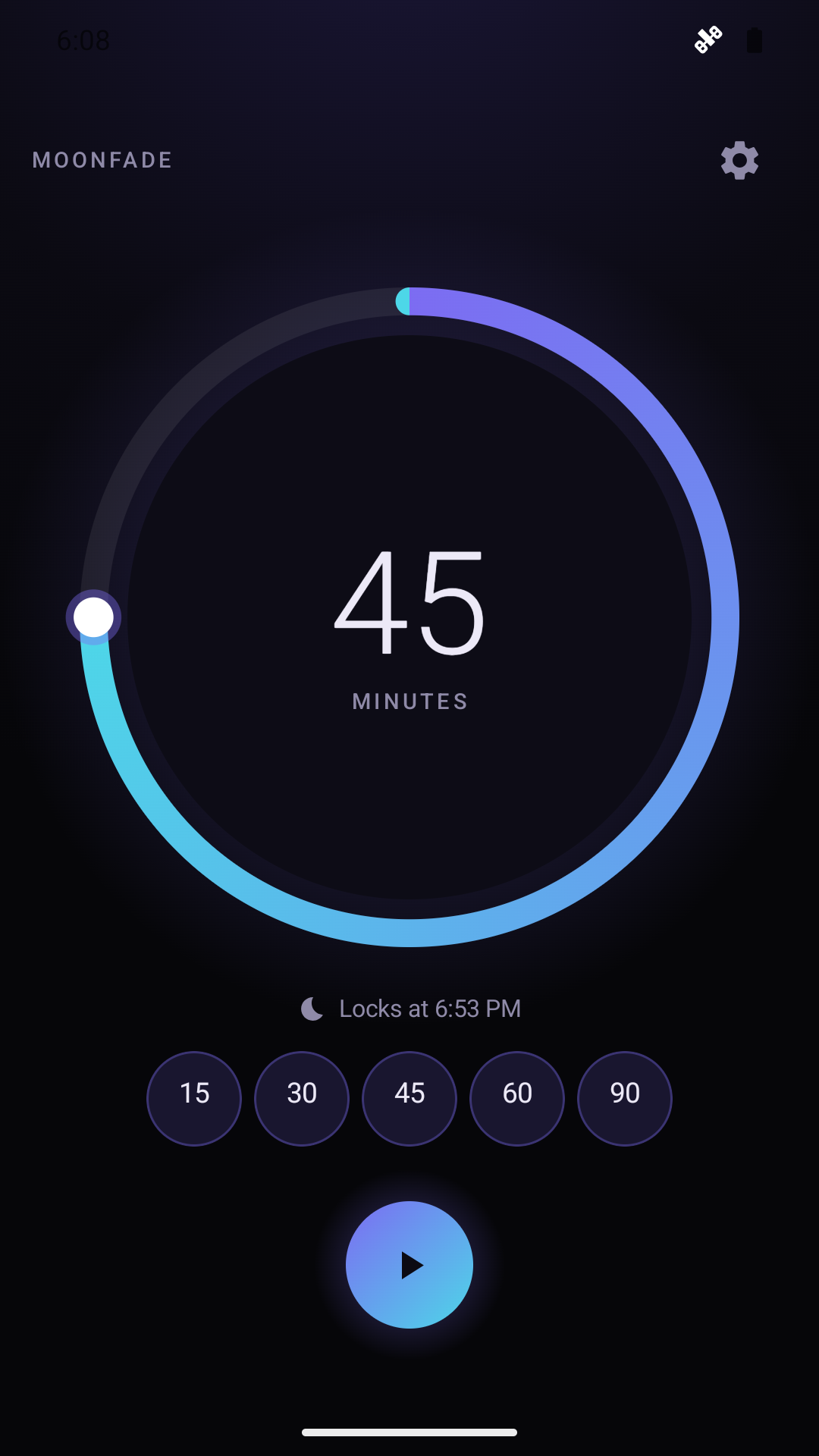
Moonfade's five built-in timer presets are 15, 30, 45, 60, and 90 minutes. Choose one when it matches the countdown you want; use the dial when your intended session has another duration. Moonfade Pro adds the ability to edit the five quick presets.
The Moonfade product page lists those standard choices and distinguishes them from the editable presets included in Pro. The useful difference is whether you want convenient built-in durations or your own frequently used values in those quick slots.
What selecting a preset actually chooses
A preset supplies the countdown duration. Selecting 30 minutes means choosing a 30-minute waiting period before Moonfade begins the ending. It does not select an episode, detect a chapter, or change how your player responds to the playback request.
The fade setting remains a separate choice. With Stop audio & video enabled, countdown completion starts the configured 0–60-second media-volume fade, followed by an audio-focus request to pause playback. Moonfade then separately requests display lock when Turn off the screen is enabled. Disabling Stop audio & video skips both fade and audio focus. These requests do not prove that the player paused or the physical display locked. A positive configured fade therefore follows countdown completion when playback ending is enabled. If you select the 30-minute preset and a 20-second fade, expect that separate fade interval after minute 30 rather than a gradual fade during the countdown.
This helps avoid a common planning mix-up: a quick timer value tells you when the ending starts, while the fade length tells you how long the gradual media-volume reduction takes afterward.
Pick a preset by the session you intend
Use the 15-minute option for a session where that waiting period fits. The 30- and 45-minute choices offer two other ready-made lengths, while 60 and 90 minutes cover longer countdowns. These numbers are convenience choices, not recommendations about sleep or health.
Before tapping Start, check the selected duration. If you intended 45 minutes but selected 60, correct it before starting rather than relying on an adjustment later. A short check is especially helpful when you switch between different listening routines.
You can use the same preset for different types of media, but do not assume the players will react identically. A familiar countdown with one music app is still a different playback setup when you move to a podcast or video player.
Choose the dial when the preset is only close
If your intended duration is 20 minutes, the dial lets you choose that value within Moonfade's 1-minute-to-24-hour range. You do not have to stretch a session to 30 minutes just because that number is already a preset.
Use the duration-selection guide for the dial, or compare built-in and editable presets before choosing Pro for that task. The dial is also useful for a brief ending test. A short countdown lets you inspect the volume fade, playback state, and display-lock result without waiting for a longer standard preset.
Think of presets as shortcuts for matching durations. When the match is poor, choosing the value directly is clearer than starting with a preset and immediately changing the active timer.
What Pro editing changes
Moonfade Pro is an optional one-time purchase through Google Play. Among its listed features are five editable quick presets. That lets you configure quick choices for durations you use repeatedly, rather than always selecting those values with the dial.
Before choosing the upgrade for this reason, identify which specific durations you would save. If the built-in five already cover your routine, you may not need editable values for that task. If you repeatedly choose another duration, a custom quick choice could reduce that repeated setup.
After editing, read the actual displayed duration when selecting a preset. A slot you changed should be understood by its current value, rather than by the number it originally used. Editing does not turn a time-based timer into a player-content control.
Keep the rest of the setup in place
Start your media in its own app, check Stop audio & video in Moonfade Settings, and choose the fade length. Tap Start and complete any prompted Device Admin activation before the countdown can begin in the current in-app flow. Keep the notification available to add time, subtract time, or stop the countdown if your plans change.
For an unexpected playback result, Moonfade Support recommends checking Stop audio & video and testing your usual player. Presets make duration selection quicker; the player and Android device still determine how they respond.
Get Moonfade on Google Play, try a built-in preset that matches your listening plan, and use the dial if the duration you need falls between those quick choices.